
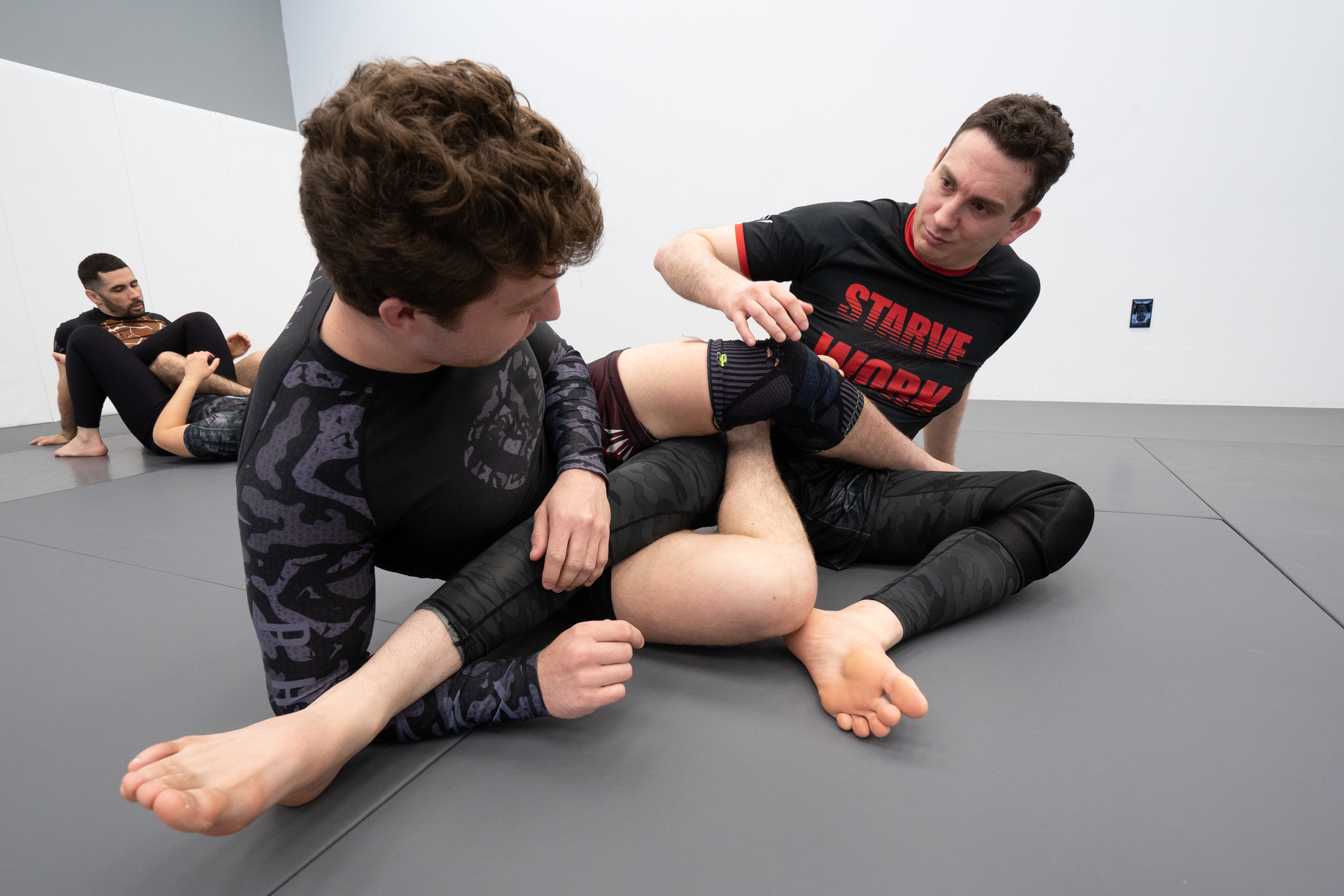
Jiu Jitsu gives kids a place to practice self-control, not just learn techniques.
Parents often ask us a version of the same question: Can a martial art really help my child behave better at home and focus more at school, or is that just marketing talk? In our experience, the answer is yes, but not in a magical, overnight way. Jiu Jitsu works because it gives kids a structured environment where discipline is trained the same way a technique is trained: step by step, with consistency.
Here in Green Brook, NJ, families are balancing busy schedules, school pressures, and the very real social challenges kids face. When a child learns how to listen, try, fail, reset, and try again, you start seeing changes that show up far beyond the mats. That is the heart of what we want for your child.
This matters locally, too. In New Jersey, bullying affects about 1 in 4 children. When kids carry themselves with calm confidence, practice respectful communication, and know how to set boundaries, it changes how peers interact with them. Jiu Jitsu is not about turning kids into fighters. It is about building steadiness.
Why discipline and respect are trained, not demanded
Discipline is not simply “being good.” Respect is not simply “saying yes sir.” For most kids, those traits are skills that develop when the environment makes them necessary and safe to practice. Our classes create that environment through routines, clear expectations, and the kind of coaching that reinforces effort as much as outcomes.
A lot of youth activities teach rules, but Jiu Jitsu teaches consequences in a controlled way. If you do not pay attention during a drill, you cannot complete it well. If you rush, you lose balance. If you panic, you tire out. Kids learn to regulate themselves because the feedback is immediate and obvious, but still safe.
Research lines up with what we see: youth Brazilian Jiu-Jitsu training is strongly associated with gains in self-discipline, commitment, and life skills transfer. Parent surveys in recent studies report improved respectfulness in about 78.5 percent of kids and life skills transfer near 96.4 percent. Those numbers feel believable because the process is practical: kids practice these behaviors repeatedly until they become normal.
Jiu Jitsu and the discipline loop: goals, reps, feedback, repeat
One of the simplest ways to explain discipline is that it is a loop. Kids set a goal, practice toward it, receive feedback, and adjust. Jiu Jitsu turns that loop into a weekly habit, and it does it without long lectures.
Goal-setting that makes sense to a child
In class, goals are concrete. A child is not asked to “be more disciplined.” Instead, we help kids aim for something they can see and feel, like keeping good posture in guard, completing a hip escape correctly, or remembering the steps of a simple takedown entry. Small wins stack up quickly, and kids start to trust the process.
Consistency that builds identity
Training one day is fun. Training consistently is identity-building. When a child shows up week after week, learns names of positions, and recognizes patterns in sparring, discipline stops feeling like a punishment and starts feeling like pride. We also see that many students who train around two times per week tend to show the most noticeable changes in focus and follow-through, simply because the habit is frequent enough to stick.
Learning from failure without spiraling
Jiu Jitsu includes failure on purpose. You get stuck. You tap. You forget a step. And then you learn. That experience matters because kids who are afraid to fail often avoid effort. On the mats, failure is normal and temporary. Over time, many students become calmer problem-solvers, because they have practiced staying composed while something is not going their way.
How respect is built into every round
Respect in a martial arts setting is not just politeness. It is how you treat training partners, how you respond to coaching, and how you handle emotions when you win or lose. Jiu Jitsu makes respect visible because the training only works when partners cooperate.
The hierarchy is clear, but supportive
Kids thrive when expectations are consistent. Our classes use a structured environment where students understand roles: instructor, helper, experienced student, beginner. That hierarchy is not about intimidation. It is about safety and guidance. When kids know where they stand, they can relax and learn.
Training partners matter, every single class
A child cannot learn Jiu Jitsu alone. Even drilling requires a partner to give realistic movement and honest resistance. That creates a natural respect for others: if you are careless, your partner gets hurt; if you are selfish, nobody wants to work with you; if you are calm and helpful, everyone improves.
Emotional regulation becomes practical, not theoretical
We teach kids how to handle intensity without losing control. In sparring, excitement spikes and frustration happens. Our job is to coach kids through that moment so they learn to breathe, reset, and stay respectful even when they are tired. That ability to self-regulate is one reason parents report reduced anxiety and improved confidence from martial arts training, with some studies noting confidence improvement around 96.4 percent and anxiety reduction around 87.5 percent.
What a typical kids class looks like in Green Brook, NJ
Parents often feel better once they understand what the room actually feels like. A good class is energetic, but it is not chaotic. It is structured, but not stiff. We keep things moving so kids stay engaged, and we also slow down at the right moments so technique stays safe.
Most classes include a warm-up that builds coordination, a technique section with clear steps, drilling time to build repetition, and controlled sparring or positional games where kids apply what they learned. The tone matters, too. We correct behavior, but we do it in a way that teaches, not shames.
Here is what we want your child to practice every week, without even realizing it:
- Listening to instructions and repeating them back through action, even when distracted
- Waiting for a turn, holding space for teammates, and following safety rules consistently
- Using controlled strength instead of wild movement, which reduces injuries and improves focus
- Communicating clearly with partners, including tapping early and respecting taps immediately
- Recovering after a mistake and returning to the task, which is a major life skill in school
Age-appropriate training: when kids can start and what changes as they grow
Most kids can start around age 4 or 5, when basic motor skills and the ability to follow instructions are in place. At that age, training looks like movement games, simple positions, and learning how to be part of a group. The point is not perfection. The point is comfort with structure.
As kids get older, classes become more technical. You will see more specific escapes, control positions, and timing-based drills. Preteens and teens often enjoy the puzzle aspect, because Jiu Jitsu rewards patience and problem-solving, not just athleticism.
We adjust intensity and expectations by age, maturity, and experience. A newer student needs clarity and encouragement. A more experienced student needs challenge and responsibility. Both can learn discipline and respect, but the “how” should fit the child in front of us.
Anti-bullying benefits: confidence, boundaries, and de-escalation first
When parents search for Jiu Jitsu in Green Brook, NJ, bullying is often part of the reason. We take that seriously, and we approach it with a clear priority: awareness and de-escalation first, physical skills last.
Confidence changes body language. A child who stands tall, makes eye contact, and speaks clearly often becomes a less attractive target. We also reinforce boundary-setting, like using a firm voice, creating distance, and getting an adult involved. If physical contact happens, Jiu Jitsu offers practical tools for controlling space and staying safer, but we always frame it as a last resort.
The bigger win is that kids feel less helpless. That sense of capability is tightly connected to reduced anxiety and better social behavior, because your child is no longer operating from fear.
Discipline that shows up at school and at home
Parents like measurable outcomes, and we do too. The truth is that you might notice changes in small moments first: your child putting shoes away without being asked, finishing homework with less arguing, or pausing before reacting when a sibling annoys them. Those are discipline and respect in real life.
Studies also suggest improved focus in youth martial arts participation, with parent-reported focus improvement around 78.6 percent in some surveys. That makes sense because training is essentially attention practice: notice details, follow steps, and stay present.
One interesting trend from 2022 to 2025 research is the emphasis on “life skills transfer.” Parents report that what kids learn in training carries into daily routines at high rates, including commitment, emotional control, and resilience. We like that phrase because it captures what we see: the mat is practice for life.
Kids and adult training: why the same art teaches different lessons
We also get questions from parents who are curious about training themselves, especially when they watch a class and realize how technical and engaging it is. The art is the same, but the lessons land differently.
Kids tend to learn discipline through structure and repetition. Adults often learn discipline through stress management and consistency under pressure. Kids learn respect through teamwork and rules; adults learn it through humility, safety habits, and recognizing how much there is to learn.
If you are specifically looking for adult Jiu Jitsu in Green Brook, NJ, training alongside your child’s journey can create a shared language at home: patience, process, and accountability. And honestly, it can be refreshing to have a hobby that rewards showing up and trying, even on days when you feel tired.
Quick stats parents care about
Numbers are not the whole story, but they point in a clear direction: structured training environments tend to produce meaningful behavioral change.
Take the Next Step
If you want your child to build discipline and respect in a way that feels earned, not forced, our approach at All in Jiu-Jitsu is designed for that. We keep classes structured, age-appropriate, and supportive, with clear standards for safety and behavior so kids can grow without feeling overwhelmed.
Whether you are exploring kids programs, looking into adult options, or hoping to find Jiu Jitsu in Green Brook, NJ that reinforces the values you already teach at home, we are ready to help you start with a plan that makes sense and a schedule you can actually keep.
Become part of a community committed to growth and respect by joining a Jiu-Jitsu class at All in Jiu-Jitsu.