
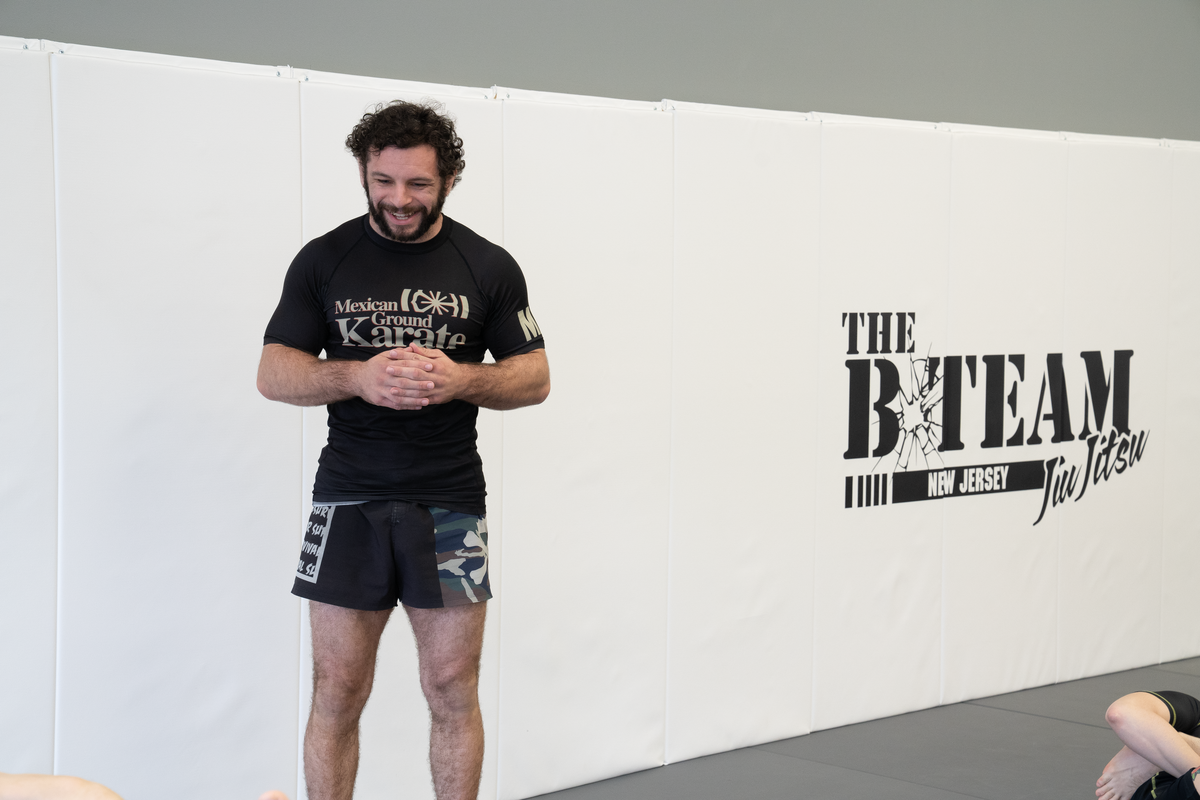
A good class can feel like flipping a switch from nonstop mental noise to calm, focused effort.
Stress in adulthood has a way of stacking up quietly until it suddenly feels loud. Work deadlines, commuting, family responsibilities, and the constant ping of notifications can leave you with a mind that never fully shuts off. We meet plenty of adults who are doing everything right on paper, yet still feel worn down.
That is one reason Jiu Jitsu has become such a popular stress-relief outlet for adults here in Green Brook. It is physical, yes, but it is also mentally engaging in a way most workouts are not. When you train, your attention gets pulled into the moment, your breathing starts to steady, and the rest of the day stops crowding the front of your brain.
In our experience, the best kind of stress relief is the kind you can actually stick with. The structure of class, the steady progress, and the supportive training environment make it easier to show up consistently and get real benefits without needing a perfect schedule or a perfect fitness level.
Why Jiu Jitsu works when your usual stress fixes stop working
A lot of stress-management advice sounds nice but fails in real life. Meditate more. Sleep more. Take a walk. Those can help, but many adults need something that creates a clean break from rumination and mental overload. Jiu Jitsu does that because it demands your focus in a practical, immediate way.
When you are learning positions and escapes, you cannot half-participate. Your brain has to solve a problem in real time, using your body as the tool. That is a big deal for stress relief because it replaces looping thoughts with clear, task-focused attention.
Another piece is intensity. We train hard, but in a controlled way. That balance matters: you get the endorphin lift and the physical fatigue that helps your nervous system downshift later, without feeling like you are punishing yourself just to get a workout done.
The four stress-relief mechanisms built into every class
People sometimes assume stress relief is only about burning calories. Our adult program is more complete than that. The stress-relief effect tends to come from four overlapping mechanisms that show up every time you step on the mats.
• Vigorous exercise that helps discharge physical tension and boosts mood after training
• Focused problem-solving that interrupts mental chatter and builds present-moment attention
• Breath control that teaches you how to stay calmer under pressure instead of spiraling
• Social connection that replaces isolation with community, shared effort, and encouragement
That mix is a big reason many adults describe training as a reset button. You leave class tired, but it is often a clean kind of tired. Your shoulders drop. Your jaw unclenches. You can drive home without replaying the whole day.
Jiu Jitsu in Green Brook, NJ: why the local lifestyle makes it a perfect fit
Green Brook life can be busy in a very specific way. Many adults are balancing professional responsibilities with family logistics, school schedules, and the small time drains that add up fast. Even when you technically have “free time,” your mind might still be doing mental math.
Training gives you a protected block of time where the expectation is simple: show up, learn, move, breathe, and improve. You do not have to be entertaining. You do not have to be productive. You just have to be present.
And because classes are structured, you do not waste your time wondering what to do next. For stress relief, that matters more than people realize. Decision fatigue is real. Walking into a class where the warm-up, technique, drilling, and live training are already planned can feel like a relief before you even start.
What Adult Jiu Jitsu in Green Brook, NJ feels like as a beginner
Starting anything new as an adult can be intimidating, especially something that involves close-contact grappling. We take that seriously. Our beginner-friendly approach is designed so you can learn fundamentals safely, understand what is happening, and build comfort step by step.
A typical first class often includes a warm-up that prepares your joints and breathing, technique instruction with clear details, and partner drills where you can practice at a manageable pace. If there is live training, we guide you on how to approach it safely and intelligently, not with ego.
You might feel awkward at first. That is normal. Most adults do. The surprise is how quickly awkward turns into engaged, and engaged turns into confident. The room starts to feel familiar. The techniques start to make sense. You begin to notice that your stress response is changing, not just during class, but outside of it too.
Why this helps anxiety without making medical promises
We are careful with language here, because stress and anxiety are personal and complex. We do not claim Jiu Jitsu is a cure for anxiety, and it is not a replacement for professional care when you need it.
What we can say, based on what we see in our adult students, is that consistent training often helps people feel steadier. You practice staying calm while your body is working hard. You practice thinking when you are uncomfortable. You practice breathing instead of panicking. Over time, that can translate into day-to-day life in a very practical way.
Even small wins matter. Escaping a tough position, protecting your posture, or remembering a technique under pressure can give you a sense of capability that many adults have not felt in a while. And that sense of capability often lowers stress, because you stop feeling like life is happening to you.
The confidence effect: stress relief you can carry into the rest of your day
Confidence is not about being the toughest person in the room. For most adults, confidence is quieter than that. It is the feeling that you can handle a hard moment without shutting down.
Jiu Jitsu teaches that through repetition and feedback. You learn how to frame, how to move your hips, how to keep your balance, how to escape, how to control position. You also learn how to lose small battles in training without losing your composure. That resilience is one of the most underrated mental benefits.
Over time, many adults notice changes like these:
You speak up more directly at work. You recover faster from a stressful conversation. You feel less rattled in traffic. You sleep a little deeper. It is not magic. It is practice.
Why it beats a standard workout for mental reset
A gym workout can be great, but it is easy to drift mentally. You can scroll between sets. You can half-run on a treadmill while thinking about emails. That is fine for fitness, but it is not always enough for stress relief.
Jiu Jitsu asks more of your attention. It gives you a clear objective and immediate feedback. When you are trying to maintain position or escape, you are not thinking about your inbox. You are thinking about where your elbow goes, how your weight is distributed, and whether your breathing is steady.
That mental absorption is one of the reasons adults come to class after work and leave feeling mentally lighter. It is active recovery for your mind, even while your body is working.
How often you should train for stress relief and real progress
Most adults do best with consistency over intensity. If your goal is stress relief, you do not need to train every day to benefit. You need a rhythm you can keep when life gets busy.
Here is a simple way to think about it:
1. Train 2 times per week to build routine, learn fundamentals, and feel mood benefits steadily
2. Train 3 times per week to accelerate learning and feel your conditioning and confidence rise faster
3. Add a 4th session only if your recovery, schedule, and energy are genuinely supporting it
We would rather see you train twice a week for a year than push too hard for a month and disappear. Stress relief should make your life feel more manageable, not more chaotic.
What to wear, what to bring, and how to feel prepared
A lot of beginner stress is just not knowing what to expect. You do not need fancy gear to get started. You need a willingness to learn and a little patience with yourself.
For your first class, we recommend:
Show up a bit early so you can settle in. Bring water. Wear comfortable athletic clothing if you do not have a gi yet. Keep fingernails and toenails trimmed for safety. And try to treat the first session as information, not a performance.
If you have questions about the class schedule, what to wear, or how our beginner classes work, the website makes it easy to plan ahead. That little bit of clarity helps, especially if your life already feels packed.
Staying safe and training smart when you are already stressed
Adults often worry that martial arts training will feel aggressive or out of control. Our priority is a training environment where you can challenge yourself without feeling overwhelmed.
We coach pacing. We encourage tapping early and often while you learn. We match partners thoughtfully. We emphasize technique over muscling through. That approach not only reduces injury risk, it also supports the real goal for many adults: leaving class feeling better than when you arrived.
Stress relief is not about winning rounds. It is about building skills, building calm, and building a habit that supports your health.
Take the Next Step
If you want a stress-relief practice that is physical, focused, and genuinely engaging, we would love to help you get started. At All in Jiu-Jitsu, our adult program is built for real people with real schedules, and our coaching keeps the learning process structured, safe, and rewarding.
Whether your goal is to feel calmer after work, build confidence through steady progress, or simply have an hour where your mind is not racing, we will meet you where you are and guide you forward at a pace that makes sense.
Take the first step toward stronger skills and confidence to start training at All In Jiu-Jitsu today.