Adult Jiu Jitsu has a way of upgrading your body, your mind, and your daily habits, one round at a time.
If you have ever wondered why Adult Jiu Jitsu keeps pulling busy adults back to the mats, the answer is simple: it teaches lessons you can use immediately, not someday. You feel it in how you move, how you breathe under pressure, and how you solve problems when the plan falls apart. For a lot of our students, that practicality is the point.
Adult Jiu Jitsu is also growing fast. Around 6 million people train worldwide, with roughly 750,000 practitioners in the United States, and search interest in Brazilian Jiu-Jitsu has climbed over the last two decades. Growth is exciting, but what matters more is that adults are finding a training method that fits real life: functional fitness, stress relief, community, and a skill set that makes sense.
Here in Green Brook, NJ, we see the same pattern. Professionals, parents, and adults who have not played a sport in years walk in wanting a structured way to get strong, clear their head, and learn something that feels meaningful. Our job is to make Adult Jiu Jitsu in Green Brook, NJ approachable, curriculum-driven, and safe, even if you are starting from zero.
Lesson 1: You learn to get fit in a way that actually carries over to real life
A lot of fitness routines look good on paper and feel awkward in practice. Jiu Jitsu flips that. You build strength and conditioning through positions, pressure, timing, and controlled resistance. It is not random intensity. It is purposeful work, repeated often enough that your body adapts without you needing to guess what to do next.
In Adult Jiu Jitsu, fitness is not a separate goal, it is baked into the skill. You improve your hips because you need them for guard retention. You develop grip endurance because you are learning to control distance. You get better cardio because you keep showing up, moving, and learning to recover between rounds.
Many adults train around 6 hours per week on average, but you do not need to start there. We structure options so your schedule can breathe. Consistency matters more than perfection, and your body notices the difference when training becomes routine instead of a burst of motivation that fades after two weeks.
What “functional fitness” looks like in class
You will usually feel these changes first:
- Better mobility in your hips and shoulders from repeated movement patterns and positional drills
- Stronger core stability because your posture gets tested every round, not just during sit-ups
- Improved balance and coordination from learning to base, shift weight, and stay grounded under pressure
- More usable endurance from controlled sparring that teaches pacing instead of pure exhaustion
- A clearer sense of progress because techniques create measurable milestones you can repeat and refine
Lesson 2: You learn calm under pressure, and that skill follows you home
Most adults do not need more stress. You need a way to process it. Adult Jiu Jitsu gives you a safe, structured environment to practice staying calm while something difficult is happening. That might sound dramatic, but it can be as simple as being stuck under side control and realizing you can still breathe, still frame, still make choices.
That calm is not a personality trait. It is a trained response. Over time, you start to recognize the difference between discomfort and danger. You stop wasting energy panicking. You learn to pause for half a second, then do the next right thing.
We also see this show up in everyday life. Meetings feel less intimidating. Traffic feels less personal. Even a rough day at work can feel more manageable when you have a place to train, reset, and leave the noise on the mat instead of carrying it around.
Safety and confidence can coexist
Adults often ask if Jiu Jitsu is safe for beginners. The data is reassuring: 69.1 percent of practitioners report no serious injuries, and injury rates per 1,000 athlete exposures are lower than sports like judo, MMA, wrestling, and taekwondo. Common trouble spots tend to be knees, shoulders, hands, and fingers, which is exactly why we emphasize controlled training, smart tapping, and progressive coaching.
Even better, evidence suggests that structured curricula and adult learning theory reduce injury risk. That is not just academic. It means you learn in a sequence that makes sense, with repeatable goals, rather than being thrown into chaos and told to figure it out.
Lesson 3: You learn to think strategically instead of relying on strength
Adult Jiu Jitsu rewards patience, planning, and problem-solving. Strength helps, of course, but strength without strategy burns out fast. Technique lets you conserve energy, create leverage, and make small adjustments that change everything.
This is one of the most life-changing parts of training for adults. You stop looking for one perfect move. You start building systems: how to escape, how to sweep, how to stabilize, how to advance position. You learn to connect dots, and those connections make you feel surprisingly capable.
We teach the game in layers. First, you learn where you are and what the position requires. Then you learn a reliable option. After that, you learn what usually goes wrong and how to fix it. That is how you build real skill, and it is why training keeps feeling fresh even after months or years.
A simple example of strategic thinking on the mat
If you are stuck on bottom, you do not need to “try harder.” You need a plan:
1. Protect yourself first by framing and managing distance
2. Recover a safer position like half guard or full guard
3. Create an off-balance so the top person has to post or shift weight
4. Use that moment to escape, sweep, or stand up safely
5. Stabilize before you rush into offense
That process is a lesson you can reuse everywhere: stabilize, assess, act, and then build.
Lesson 4: You find a community that is built on mutual effort, not small talk
Adults are busy, and it can be surprisingly hard to make new connections once your life is full. Jiu Jitsu makes it easier because you are working with people, not just near people. You drill together. You spar together. You learn each other’s pace, personality, and habits. Respect grows quickly when everyone is putting in real effort.
Our adult room tends to include a mix of backgrounds: professionals, parents, former athletes, and complete beginners. Interest from women and older professionals continues to rise, and we are glad to see it. A good room is not built on one type of person. It is built on shared standards: train safely, help your partner, and keep learning.
Community is also a practical benefit. When you know people expect you to show up, you show up. When you miss a week, you feel it, and not in a guilt way. More like, “Oh right, I like who I am when I train.”
What a supportive training culture feels like
In a healthy adult program, you can expect:
- Partners who match intensity so rounds stay productive, not reckless
- Coaches who give you one or two clear cues instead of drowning you in details
- A room where tapping is normal and respected, not treated like failure
- Beginners who are coached, not rushed, so the learning curve stays manageable
- Higher belts who remember what it felt like to be new and help you get oriented
Lesson 5: You build long-term mental sharpness, not just short-term motivation
Adult Jiu Jitsu is physical, but it is also deeply cognitive. You have to remember sequences, anticipate reactions, and make decisions under time pressure. That mental workload is part of why adults report improved focus, patience, and problem-solving. It is also why Jiu Jitsu is often discussed as a tool for lifelong cognitive health, especially as we age.
You do not need to be a competitor to benefit from this. In fact, many adults train specifically because it gives the mind a structured challenge. You are learning a new “language” of movement and strategy, and that learning keeps your brain engaged in a way scrolling never will.
This is one of the reasons Jiu Jitsu in Green Brook, NJ fits so well for local adults. When life is already full, you want activities that give you a return on time. Adult Jiu Jitsu gives you that return in multiple currencies: fitness, skill, mental clarity, and a sense of progress you can feel.
What to expect when you start Adult Jiu Jitsu in Green Brook, NJ
Beginners often worry about two things: looking awkward and getting hurt. Looking awkward is normal, and it fades faster than you think. Safety is a coaching choice, and we treat it like a system, not a slogan.
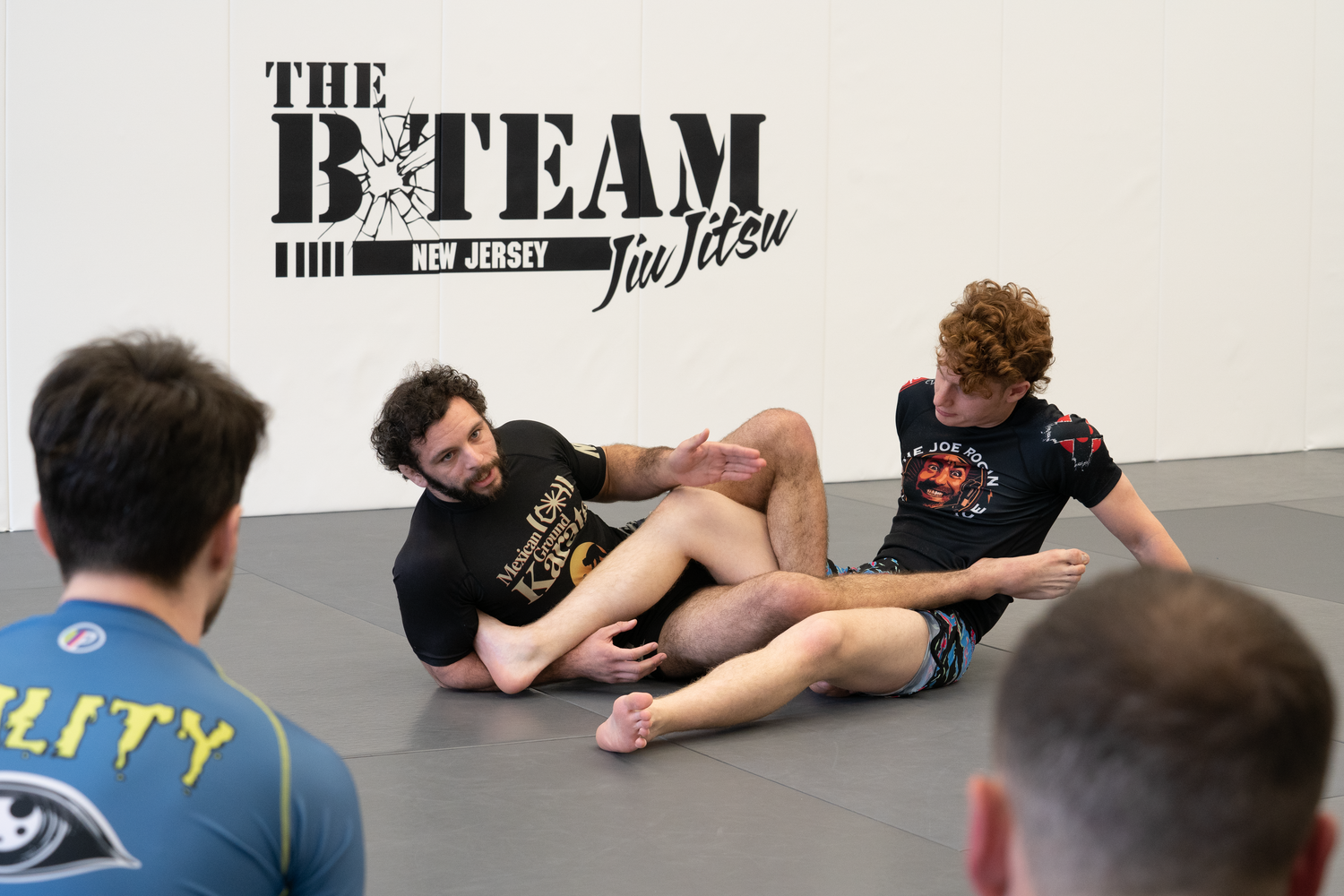
A typical early path is simple: learn fundamentals, repeat them, and slowly add resistance. You will drill techniques with a partner, ask questions, and then pressure-test what you learned through controlled sparring. You do not need to “win” rounds. You need to learn what is true.
If you are juggling work, family, and everything else, we can help you build a realistic routine. Training two to three days per week is a strong start for most adults. From there, you can adjust based on goals and recovery. Consistency beats intensity, especially in the beginning.
Take the Next Step with All in Jiu-Jitsu
If you want Adult Jiu Jitsu to change your fitness, your mindset, and the way you handle pressure, the key is a safe, structured place to train consistently. That is exactly what we built at All in Jiu-Jitsu, right here in Green Brook, NJ, with an adult-focused approach that helps you learn progressively and train smart.
When you are ready, we will help you start where you are, build confidence through fundamentals, and keep moving forward with a clear plan. Adult Jiu Jitsu is not about being tough on day one, it is about becoming capable over time, and we would love to be part of that process at All in Jiu-Jitsu.
Train with purpose and make steady progress by joining a Jiu-Jitsu program at All In Jiu-Jitsu.