
Your first class should feel welcoming, structured, and safe, not intimidating or chaotic.
Walking into your first Adult Jiu Jitsu class can feel like stepping into a new language and a new routine at the same time. That is normal. We meet plenty of adults who are excited, curious, and also quietly wondering if they will slow the room down or do something wrong. You will not.
Adult Jiu Jitsu is one of the fastest-growing martial arts in the U.S., with search interest up more than 104 percent from 2004 to 2024, and millions of people training worldwide. Growth like that does not happen because everyone is fearless. It happens because beginners keep showing up, finding a system that works, and realizing the first day is much more manageable than it looks from the outside.
If you are looking for Adult Jiu Jitsu in Green Brook, NJ, our job is to make your first class clear and approachable: what you will do, what you should bring, how hard you should go, and how to leave feeling proud you started.
Why Adult Jiu-Jitsu Is Built for Beginners
Most adults start training for a practical reason: fitness that stays interesting, self-defense that makes sense, or a new challenge that feels real. You do not need to be in shape first. You get in shape by training, one class at a time, with a pace that matches where you are today.
The adult segment is the engine of Brazilian Jiu-Jitsu’s global growth, and the numbers back that up. The global market was valued around 1.2 billion USD in 2025 and is projected to reach about 2.5 billion USD by 2033. That kind of stability matters because it means Adult Jiu Jitsu is not a fad. It is a long-term skill, like learning to swim or lift properly, and you can start at any age.
Our beginner approach keeps the focus on fundamentals, safety, and steady progress. We would rather you leave your first class thinking, “I can do this,” than leave exhausted and confused.
What Happens in a First Adult Class
A first session usually follows a predictable rhythm, and predictability is a good thing when you are brand new.
Check-in and a quick orientation
Plan to arrive a little early so we can get you settled. We will point you to where to put your things, talk you through what the class will cover, and answer the questions you are probably holding back, like what to do with your shoes and when to drink water.
You will also get a quick overview of mat etiquette. It is simple. Be clean, be respectful, and be aware of your training partner’s safety.
Warm-up that supports the techniques
Warm-ups in Adult Jiu Jitsu are not random calisthenics. We use movements that connect to grappling: learning how to fall safely, how to move your hips, how to stay balanced, and how to get up off the ground efficiently.
If you have not moved like that in a while, it can feel awkward for a minute. That passes quickly.
Technique instruction and drilling
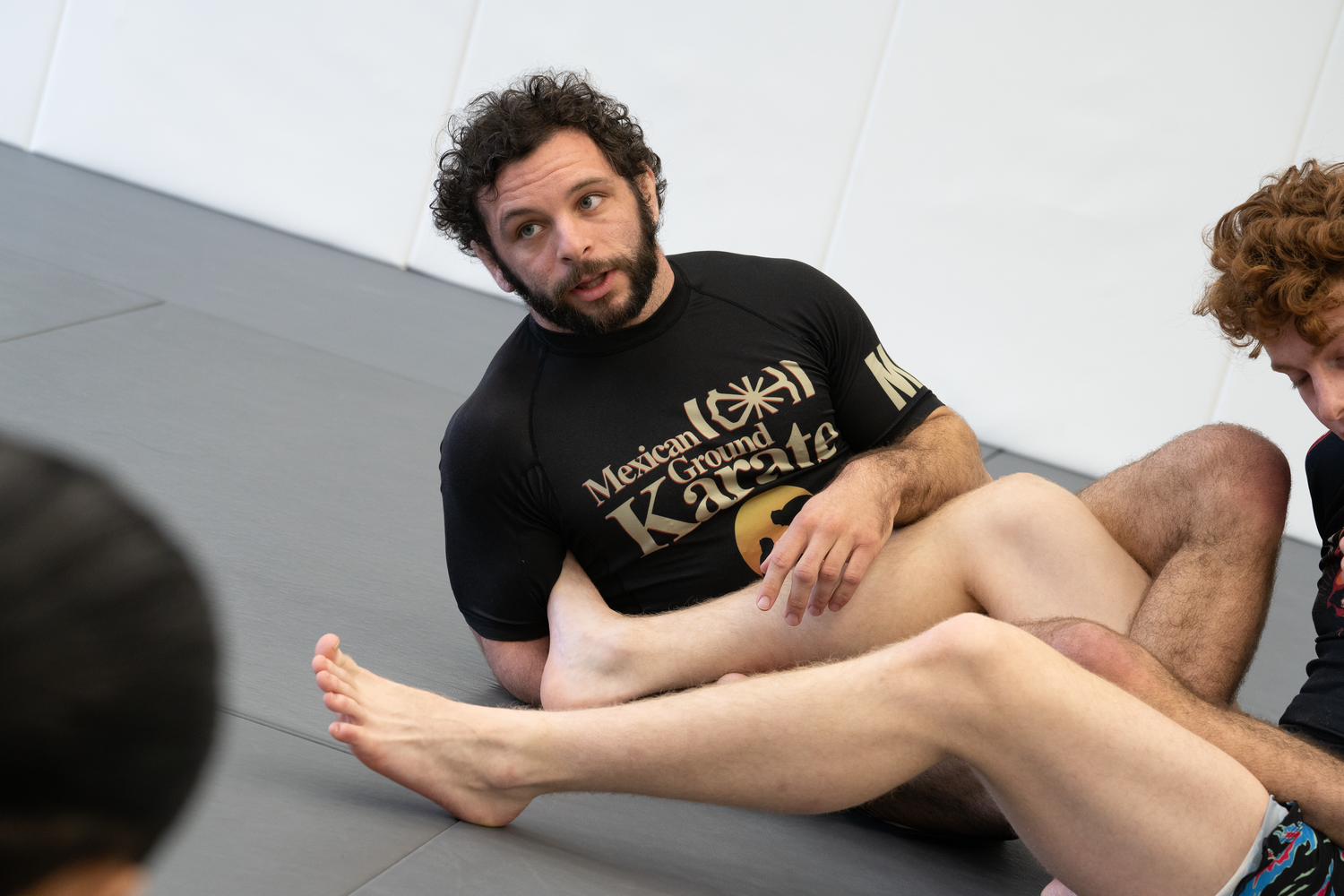
This is the core of class. We demonstrate a small set of techniques, then you practice with a partner. Expect lots of repetition with coaching along the way. Drilling is where you build coordination and timing without the pressure of full resistance.
We keep beginner technique goals realistic. You are learning positions and concepts first, not trying to memorize a hundred moves.
Positional training or light sparring, depending on the day
Some first classes include controlled “live” training, and some focus on positional rounds where the starting situation is set. If you do spar, you will not be thrown into the deep end. The goal is to experience the art, safely, at an appropriate intensity.
You can always opt for a lighter round. Communicating with your partner is part of training, not a disruption.
What to Bring and What to Wear
You do not need to overthink gear for your first Adult Jiu Jitsu class. Keep it simple, clean, and comfortable.
Here is what we recommend for day one:
- A clean athletic shirt that fits close to your body so it does not snag or ride up during movement
- Athletic shorts or workout pants without zippers, snaps, or hard pockets that can scratch training partners
- Flip-flops or slides for walking off the mat, since we keep the mat area clean
- A water bottle you can sip between rounds
- Basic hygiene items like deodorant and a small towel if you tend to sweat a lot
If you are starting in the gi, we will guide you on sizing and what to buy. If you are starting no-gi, normal training clothes are fine as long as they are safe for grappling.
Gi vs No-Gi for Beginners: Which Should You Start With?
This is one of the most common questions we hear, and it is a good one. Both styles are valuable, and both build real skill. The difference is the pace and the grips.
Starting in the Gi
The gi slows things down a bit because grips create friction and control. That can make learning positions easier. It also gives you clear feedback: if someone has a strong grip and good posture, you feel it immediately.
The gi is great for building patience, balance, and technical problem-solving.
Starting No-Gi
No-gi is faster and slipperier, so movement and positioning matter even more. You rely on body control instead of cloth grips. Many adults enjoy no-gi because it feels more like athletic wrestling, and it can be easier to dress for after work.
No-gi is great for conditioning, scrambles, and learning to control without relying on handles.
If you are unsure, we will help you choose based on your schedule, comfort level, and goals. Either way, Adult Jiu Jitsu in Green Brook, NJ should feel like a skill you are building, not a test you are failing.
How Hard Should You Train on Day One?
Beginner success in Adult Jiu Jitsu comes from pacing, not intensity. Most new students go too hard because they do not know what to do yet, so they try to solve everything with strength. That is normal, and we coach you through it.
A better approach is to aim for smooth effort:
- Use about 50 to 70 percent intensity when drilling and during any live training
- Breathe through your nose when you can, and exhale during effort
- Tap early and often, especially when you are learning joint locks and chokes
- Ask questions between rounds, not during the demonstration, so you get clarity without breaking class flow
This is one reason injury rates in BJJ compare favorably to other combat sports. The culture of tapping and progressive training helps keep people healthy, and research shows most practitioners avoid serious injuries. Our structure is designed to keep you training consistently, because consistency beats hero workouts.
Safety, Hygiene, and Injury Prevention: What We Take Seriously
Adults have real lives. Jobs, kids, sore backs, old knee issues, all of it. So we treat safety as part of the curriculum, not an afterthought.
Common medically diagnosed issues in BJJ include skin infections and strains in areas like knees and feet. Most of that risk can be reduced with smart habits and coaching.
Our non-negotiables for a safe room
We keep these standards clear from the start:
- Tap early and respect taps instantly, every single time
- Control first, then speed, then intensity, in that order
- Keep nails trimmed and training clothes clean to reduce skin issues
- Communicate injuries or limitations before partnering up
- Choose technique over force, even when you are tired
If something feels off, we would rather you sit out a round than push through and turn a small issue into a long break.
What You Will Learn in Your First Month
Adult Jiu Jitsu can look complex, but the learning path is surprisingly structured. The first month is about positions, escapes, and basic control, not fancy submissions.
You can expect to work on:
- How to fall, frame, and move your hips to create space on the ground
- Key positions like guard, side control, mount, and back control
- Simple escapes that help you breathe and regain safer positions
- Basic submissions and how to defend them responsibly
- Positional awareness, meaning knowing where you are and what your next goal should be
Progress often feels like small wins: surviving a little longer, escaping once, holding a position without panicking. Those add up quickly.
Mindset: How to Feel Comfortable as a New Adult Student
A lot of adults worry about being the oldest, least athletic, or most out of shape person in the room. The truth is, beginner rooms always include a mix. And even advanced students remember what it felt like to be new.
We encourage a mindset that keeps you coming back:
- Treat the first few weeks like learning to drive a manual car: awkward at first, then suddenly normal
- Measure progress by understanding, not by “winning” rounds
- Ask for one small correction each class, then focus on that one thing
- Give yourself permission to be a beginner, because you are one, and that is fine
There is also a real mental health angle here. Studies on adult BJJ participants report improvements in confidence and reductions in anxiety for the majority of people surveyed, and a strong sense of community is nearly universal. Adults stick with training when it supports their mind as much as their body.
Class Schedule, Consistency, and Realistic Goals
Your results in Adult Jiu Jitsu come down to attendance and recovery. Two to three classes per week is a realistic starting point for most adults. One class per week is still useful, but you will feel the learning curve more.
If you are balancing work and family, consistency is the goal, not perfection. We recommend you pick days you can actually keep, then build from there.
Also, it helps to understand the long game. Only a small percentage of students progress all the way to black belt, and that is not meant to discourage you. It is a reminder that the value is in the process: showing up, improving, and building a skill you can use for life.
Ready to Start Training at All in Jiu-Jitsu
If you are curious about trying Adult Jiu Jitsu in Green Brook, NJ, we will make your first class straightforward: clear instruction, a beginner-friendly pace, and a training room where you can ask questions and learn without feeling rushed. When you know what to expect and how to prepare, walking through the door gets much easier.
At All in Jiu-Jitsu, we focus on helping you build a foundation you can trust, whether your goal is fitness, self-defense, stress relief, or simply learning something challenging in a supportive community. Your first class is not about proving anything. It is about starting.
New to Brazilian Jiu-Jitsu? Start your journey by joining a beginner-friendly class at All In Jiu-Jitsu.