
The fastest confidence gains usually come from doing hard things in a supportive room, one class at a time.
Confidence is a strange thing: you cannot talk yourself into it for long, but you can train it. That is one reason Jiu Jitsu has become such a powerful practice for adults in Green Brook who want to feel more capable in their bodies and more comfortable around other people.
In our classes, confidence is not a motivational poster on the wall. It is a skill you build through repetition, feedback, and small wins that stack up over time. You learn a technique, you try it, it does not work, you adjust, and then it clicks. That process changes how you carry yourself, and it tends to spill into work meetings, family conversations, and social situations in a surprisingly practical way.
Just as important, the social side of training is baked into the sport. You cannot improve alone. You need partners, communication, and trust. If your goal is to feel less awkward walking into new spaces and more at ease talking to people, training Jiu Jitsu in Green Brook, NJ gives you a structured way to practice that too, without forcing it.
Why Jiu Jitsu builds real confidence instead of temporary hype
A lot of “confidence” advice is abstract. On the mat, it is concrete. You either escaped the position or you did not. You either stayed calm under pressure or you tensed up and burned out. That clarity is helpful because it removes guesswork and replaces it with progress you can measure.
We also like that Jiu Jitsu rewards problem-solving more than brute force. Technique, leverage, timing, and decision-making matter. When you realize you can handle tough rounds by thinking clearly and applying fundamentals, you start trusting yourself in a deeper way. It is not about feeling invincible. It is about feeling capable.
Mastery changes how you see yourself
Most students begin with the same quiet question: “Can I actually do this?” The early weeks answer that question over and over, in small ways. You learn how to fall safely. You learn how to frame and create space. You learn how to breathe when someone is applying pressure from the top. Those are not just athletic skills; they are proof that you can learn something difficult in a controlled environment.
Over time, belt progression and skill milestones become confidence anchors. Even when your day feels chaotic, you can point to something real: your guard retention improved, your escapes are cleaner, your reactions are calmer. That is earned confidence, and it tends to stick.
Technique-first training levels the playing field
One of the most empowering parts of training is watching technique beat size. Smaller students learn how to manage distance, use angles, and create off-balances. Newer students learn that tapping is not “losing” but gathering information. That mindset shift alone helps many adults who have struggled with self-image, anxiety about performance, or a fear of being judged.
In adult Jiu Jitsu in Green Brook, NJ, we keep the focus on development, not ego. When the culture supports learning, you take risks, ask questions, and improve faster. And yes, that increases confidence outside the gym too.
Social skills you practice every time you step on the mat
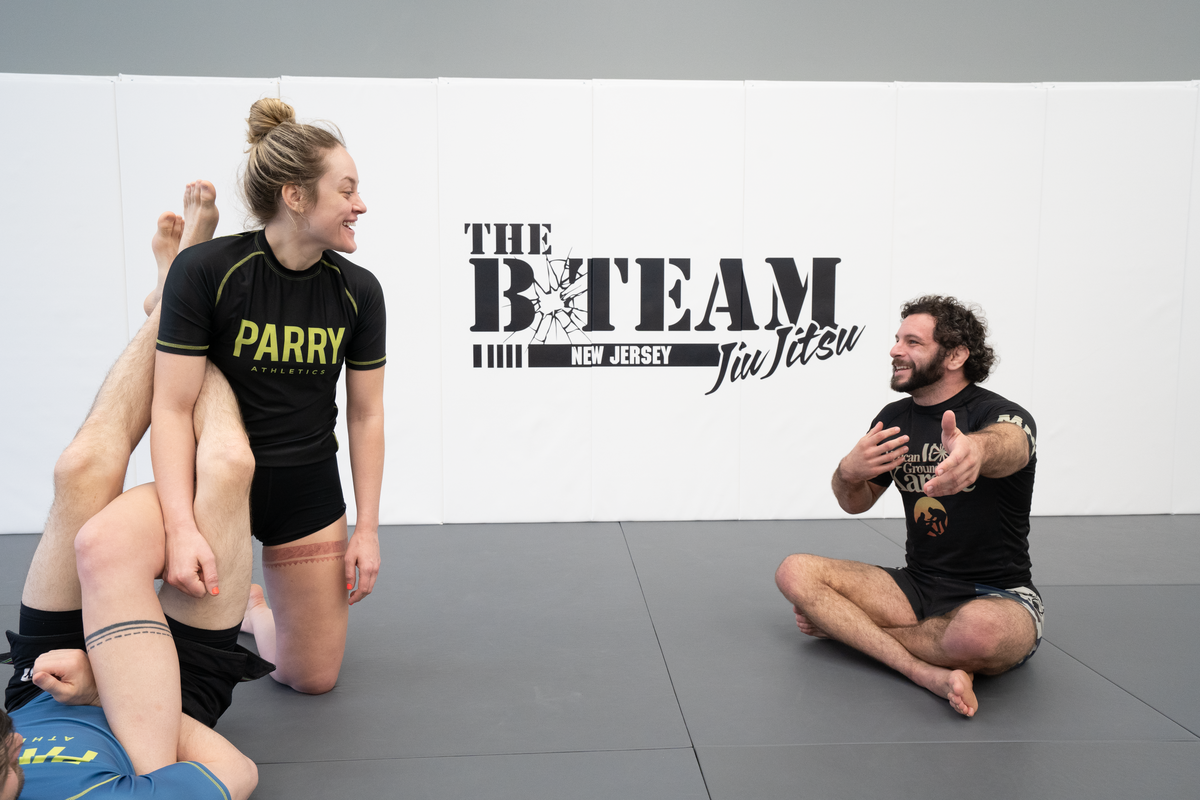
People sometimes think martial arts is a solitary journey. In reality, you spend most of your time interacting: drilling, asking for clarification, giving your partner a good look, adjusting pace, and communicating about safety. That is social skill training, just in a different format than a networking event.
The environment also makes conversation easier. You already have something in common with everyone in the room. You do not need a perfect icebreaker because the class itself creates connection.
Communication becomes practical, not performative
Good training partners talk. Not endlessly, but enough to coordinate rounds, clarify goals, and prevent injuries. You learn to say things like, “Can we start from side control?” or “Let’s go lighter, my shoulder is tight today.” That is assertive communication with a purpose, which is often easier to practice than open-ended socializing.
You also learn to receive feedback without taking it personally. Coaches correct details. Partners point out openings. That can feel vulnerable at first, but it becomes normal quickly, and it carries over into professional settings where feedback matters.
Trust and cooperation create real connection
Every roll includes an element of trust: you trust your partner to apply control without recklessness, and you respect the tap immediately. That shared agreement builds a kind of quiet camaraderie. Over weeks and months, teammates become the people you look forward to seeing, even if you are tired when you walk in.
Because you rotate partners, you also interact with different ages, backgrounds, and personalities. That is a social advantage you do not always get in everyday life. You learn how to adapt, read energy, and meet people where they are.
Resilience: the confidence skill most adults actually need
Confidence is not only about “feeling good.” It is about staying steady when things get uncomfortable. Jiu Jitsu teaches that directly. You get stuck. You problem-solve. You tap, reset, and try again. That cycle builds emotional control and resilience, which are the foundations of social confidence too.
When you know you can handle pressure on the mat, everyday stress feels more manageable. A tense conversation at work, a hard family discussion, or a socially unfamiliar event becomes less intimidating because you have trained your nervous system to stay present and respond thoughtfully.
Learning to be comfortable being a beginner
Adult life does not give many safe places to be new at something. Training gives you that space. Nobody expects you to be perfect. We expect you to show up, learn, and keep a respectful attitude. That alone can be a relief.
As you get used to being a beginner, you also get better at starting conversations and asking for help. You stop viewing questions as weakness. You see them as part of growth, and that is a big social skill.
What a confidence-building class actually looks like
A typical session is structured so you can learn, practice, and then apply the skill under pressure in a controlled way. The rhythm matters: it gives you repeated chances to succeed, adjust, and try again, which is exactly how confidence is built.
Here is what that progression usually includes:
• A warm-up that supports movement quality, balance, and injury prevention so your body feels prepared instead of rushed
• Technique instruction with clear details, where we explain what to do, why it works, and what mistakes to avoid
• Partner drills that let you repeat the movement enough times to build comfort and timing
• Positional sparring that narrows the focus, so you practice one situation without feeling overwhelmed
• Live rounds where you test skills, manage nerves, and learn to stay calm while thinking
• A cool-down or quick recap that helps you remember key points and track progress across weeks
If you want a practical path to better self-belief and better people skills, this structure is the not-so-secret formula. It is consistent, repeatable, and surprisingly effective.
Social confidence for adults: why Jiu Jitsu works when “just be outgoing” fails
Many adults do not need more advice. You need an environment that naturally draws you out, even on days when you are not feeling especially social. Jiu Jitsu does that because participation is built into the training. You have partners. You switch rounds. You problem-solve together. You laugh sometimes, too, usually after a scramble that got weird.
Over time, you build familiarity. Familiarity becomes comfort. Comfort becomes confidence. You start greeting people first. You start asking someone to drill. You start feeling like you belong in the room. That is not accidental. That is the product of consistent exposure to a friendly, structured community.
The community effect without the pressure
We keep the tone welcoming and focused. You do not need to be the loudest person in the room. You do not need to be “tough.” You just need to be respectful, consistent, and willing to learn. Social growth happens naturally when the expectations are clear and the environment is supportive.
And for adults juggling work and family, that matters. You want a place where you can train hard, learn something real, and leave feeling better than when you walked in.
Getting started in Green Brook without overthinking it
If you are curious but nervous, that is normal. Most people feel that way before the first class. The best approach is simple: show up, take it step by step, and let the process work.
Here is how we recommend starting:
1. Check the class schedule on the website and pick a day that feels realistic for your weekly routine
2. Arrive a little early so you can get oriented and ask a couple quick questions without feeling rushed
3. Start with fundamentals and focus on one goal per class, like breathing, posture, or a single escape
4. Communicate with partners about pace and intensity so you can learn safely and comfortably
5. Track progress monthly, not daily, because confidence grows through consistency, not perfection
This kind of steady approach is especially helpful for adult Jiu Jitsu in Green Brook, NJ, where the goal is long-term growth, not a short burst of motivation.
Take the Next Step
If you want a grounded way to improve confidence and social skills, Jiu Jitsu gives you a practice you can feel in your posture, your decision-making, and your day-to-day interactions. The mix of technical learning, supportive training partners, and manageable challenge creates progress that is real, not performative.
When you are ready, we would love to welcome you at All in Jiu-Jitsu in Green Brook, NJ and help you get started with a plan that fits your experience level and schedule, without pressure and without the need to “already be in shape.”
Train with experienced instructors and a supportive team by joining a Jiu-Jitsu class at All in Jiu-Jitsu.